Snow Guards & Snow Retention in Aspen, Colorado
Snow guards hold the snowpack on your roof so it melts and releases gradually instead of coming off all at once. In Aspen that is not a cosmetic preference — it is how you keep several tons of snow from landing on a walkway, an entry, a lower roof, a parked car or a neighbor's property.
The Code Reason, Specifically
Pitkin County adds a snow shed design provision to the adopted building and residential codes. It reads: “Roofs shall be designed so that they do not shed ice and snow onto the main path of egress to the public way, upon the public way or upon neighboring property.” The first listed exception is roofs with mechanical snow retention devices secured to roof framing members or to solid blocking, installed per the manufacturer's instructions or designed by a licensed structural engineer.
The other exceptions are worth knowing, because they explain why not every roof in the valley has guards on it: roof areas with a horizontal dimension of no more than 48 inches that will not receive snow shedding from a higher roof; re-roofing of legally existing roofs not framed to allow effective installation of retention devices; and asphalt shingle roofs with a pitch of 6:12 or less. Your local building department is the authority on how this applies to a specific address — this is orientation, not a code ruling.
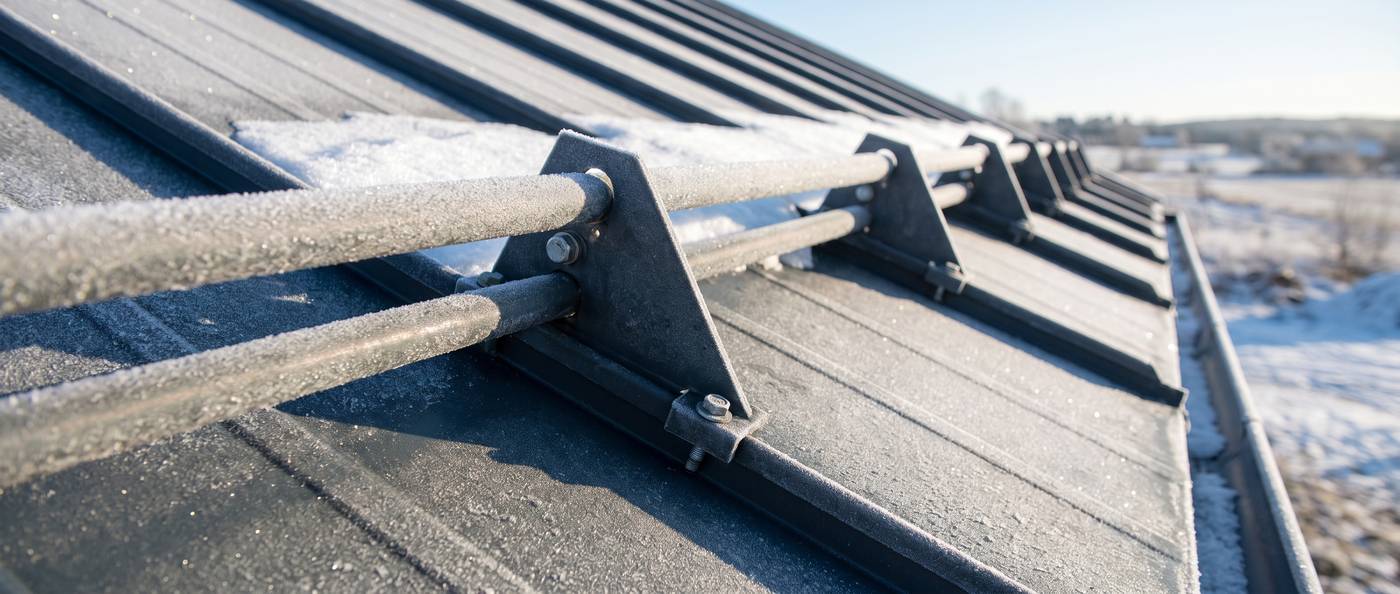
Snow Guards vs. Snow Fence vs. Snow Rail
- Individual snow guards — pads, cleats or brackets distributed in a staggered pattern across the roof plane so the pack grips in many places at once. Common on shingle roofs.
- Snow rails or fences — continuous pipe or bar systems mounted on brackets, typically in one or more rows above the eave. Higher holding capacity; the standard on metal roofs in deep-snow country.
- Clamp-on seam guards — for standing-seam metal, clamps grip the seam itself with no penetration of the roof panel. The cleanest retrofit available.
Metal roofs are common in Aspen and they shed dramatically — a snow slab on a slick metal surface releases fast, all at once, and with enormous energy. That combination is exactly why snow retention matters more here than in most of the country.
Layout Is Calculated, Not Eyeballed
How many guards, in how many rows, and where, comes out of roof pitch, the ridge-to-eave length of the roof plane, the design snow load and the tested holding capacity of the specific product. Manufacturers publish layout tables for this. The classic failure is a single row of guards at the eave on a long, steep roof: the full weight of the plane loads one row, and the row rips out — taking roofing with it.
Snow Retention and Ice Dams Together
Holding snow on the roof means it stays where a warm roof deck can melt it from below, so on a house with an existing heat-loss problem, retention can make ice dams worse. The answer is to treat them as one project: retention to control the release, plus attic air sealing, insulation and ventilation, plus heat cable at the eave where drainage needs guaranteeing. Doing retention alone on a roof that already dams is how people end up unhappy with snow guards.
Snow Guard Installation Across the Valley
Snow guards and snow retention in Aspen, Snowmass Village, Woody Creek, Old Snowmass, Basalt, El Jebel, Carbondale and Glenwood Springs. Like heat cable, this is fall work — installation on a dry, snow-free roof is safer, faster and cheaper than anything attempted mid-winter.