Roof Snow Removal in Aspen, CO
Aspen Roof Snow Removal connects Aspen homeowners and property managers with insured local crews for roof snow removal, roof shoveling and ice dam steaming. That is the whole business: getting snow and ice off Aspen roofs before either one turns into a repair bill. Roof snow removal in Aspen is not the same trade as plowing a driveway, and the difference shows up the first time somebody puts a steel shovel through a standing-seam panel.
The town of Aspen averages 170.8 inches of snow a year under the NOAA 1991–2020 climate normals — February is the heaviest month at 28.3 inches, with January right behind at 28.1 and December at 27.5. Snow starts landing in October and is still falling in May. That is seven months in which a roof somewhere in this valley is carrying more weight than its owner realizes.
Aspen's building code takes that seriously. The City of Aspen's amended climatic design table sets a ground snow load of 100 pounds per square foot, and requires ice shield underlayment on roofs. For comparison, much of the lower 48 designs to 20 or 30 psf. Aspen roofs are built for real winter. What they are not built for is a drift stacking behind a dormer, a lower roof catching everything the upper roof sheds, or six weeks of freeze-thaw turning the bottom four feet of the roof into solid ice.
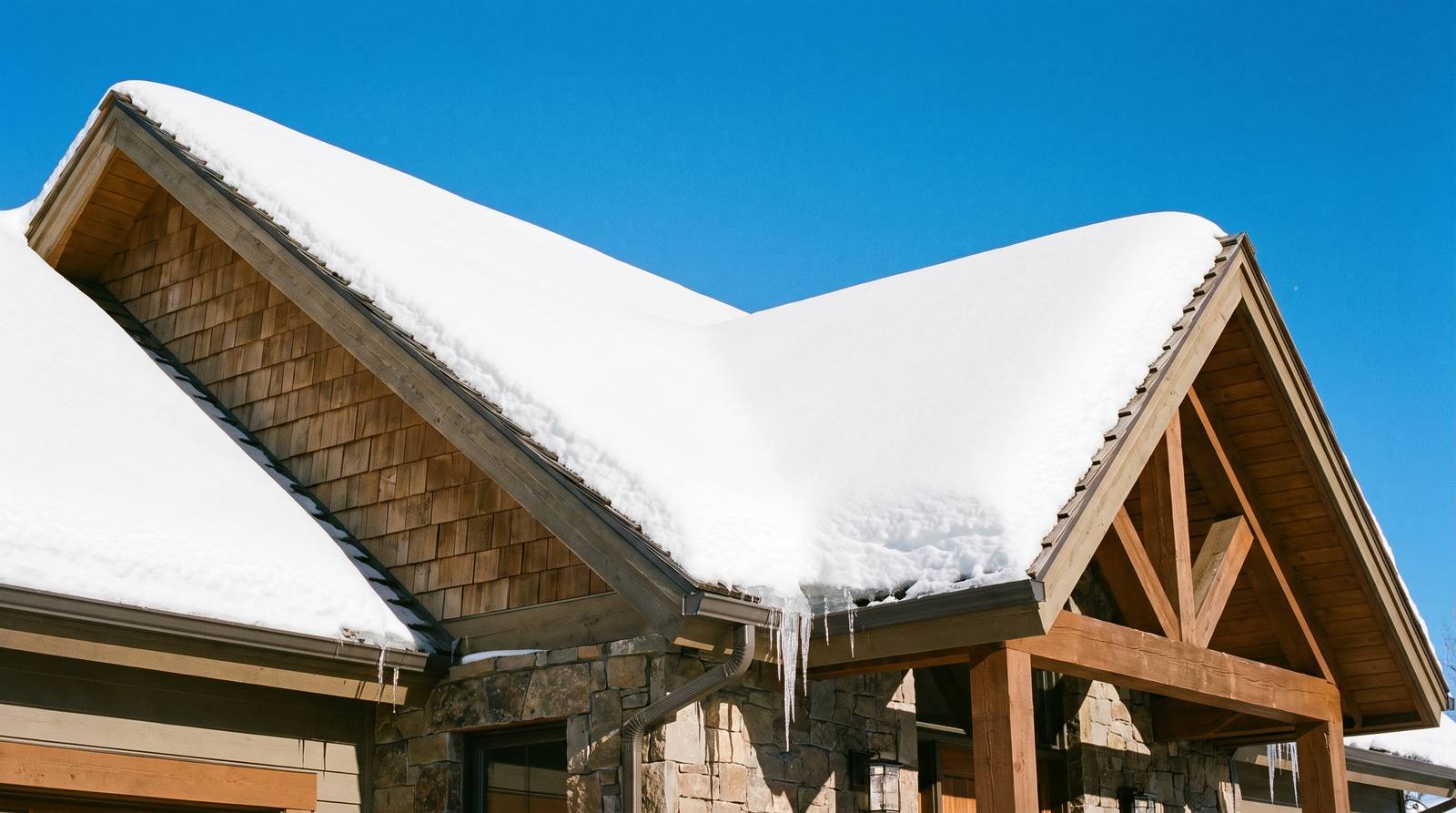
Ice Dam Removal in Aspen
An ice dam is what happens when heat escaping the living space melts snow on the upper roof, the meltwater runs down to the cold eave, and refreezes there. The ridge of ice grows, backs water up under the shingles, and the water finds the inside of the house. Aspen's building code anticipates exactly this: Pitkin County amends the residential code to require an ice dam barrier extending at least four and a half feet inside the exterior wall line, more than double the two feet the base code asks for.
That membrane is your insurance policy, not your solution. When water is already coming through the ceiling, the fix is low-pressure steam — roughly 290°F, delivered gently, cutting channels through the dam and lifting it off without touching the roofing. Chipping it off with hand tools destroys shingles and flashing and the dam simply reforms.
Roof Snow Shoveling and Snow Load Relief
Roof shoveling is the blunt half of roof snow removal: getting weight off the structure. Crews work in lifts, deliberately leaving an inch or two of snow as a wear layer so nothing metal ever meets the roof surface. Low-slope and flat sections are the ones to watch in Aspen — a steep pitch sheds, a flat roof simply accumulates until somebody removes it.
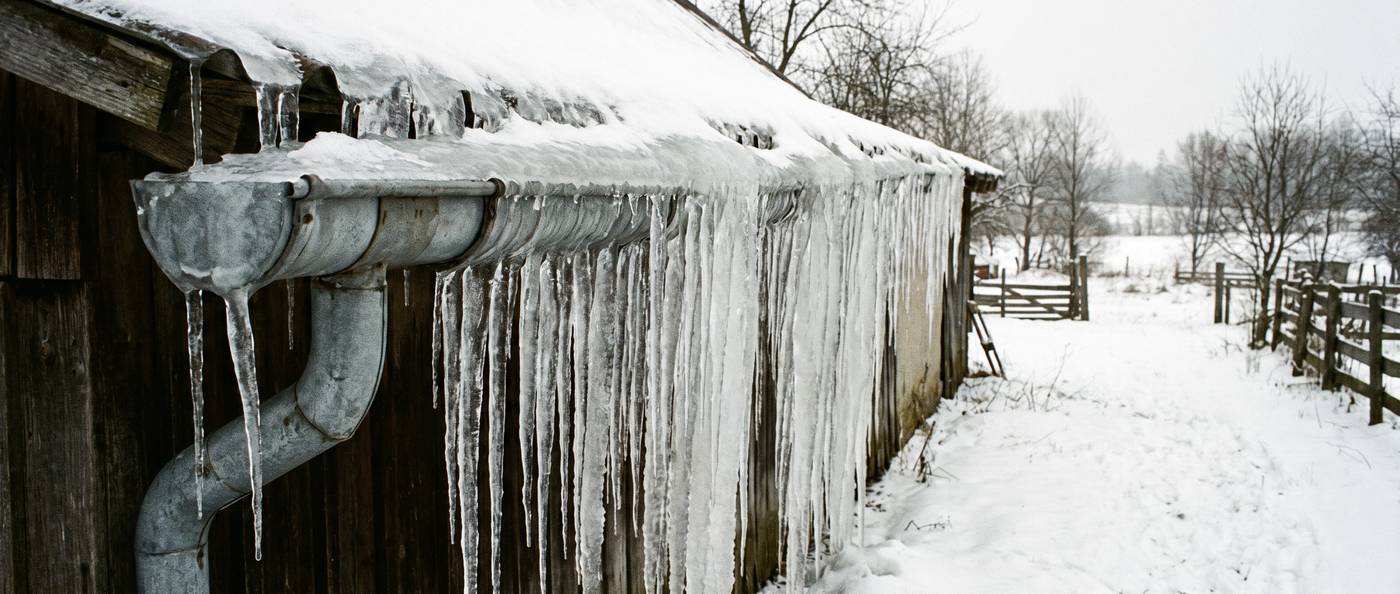
Emergency Roof Snow Removal
Some roof snow removal calls cannot wait. Water actively coming through a ceiling, a roof visibly sagging, doors that have started to bind, snow shed blocking the only way out of the building, or a lower roof buried by what came off a higher one. Those are emergency roof snow removal calls, and they are why the phone gets answered during storms.
Stopping It Happening Again
Once the roof is clear, two things stop the same call next January. Heat tape and self-regulating heat cable at the eaves, valleys and around skylights keep drain paths open so meltwater leaves instead of freezing. Snow guards and snow retention hold the snowpack in place so it melts where it sits rather than releasing all at once onto a walkway, a car, or a neighbor's property. Snow retention is not decoration in this county — the adopted code requires that roofs not shed snow and ice onto egress paths, the public way, or neighboring property, and mechanical snow retention devices are the first listed way to comply.
What Roof Snow Removal Costs in Aspen
Nationally, roof snow removal runs about $200 to $500 for a typical visit or $50 to $100 per hour, rising to $1,000 to $2,000 where the home is large or the roof is genuinely hard to reach. Ice dam work is priced differently — steam removal commonly lands between $800 and $2,400, and hourly rates of $150 to $700 are normal. Aspen sits at the top of those ranges, for reasons anyone who has looked at an Aspen roofline understands. Full breakdown on the roof snow removal cost page.
Where We Provide Roof Snow Removal
Roof snow removal in Aspen is the core of it, and the same crews run the valley: Snowmass Village, Woody Creek, Old Snowmass, Basalt, El Jebel, Carbondale and Glenwood Springs. Elevation drops and snowfall drops with it as you go down-valley, but ice dams do not — freeze-thaw is often worse at lower elevations where daytime temperatures cross 32°F more often. See service areas.