Emergency Roof Snow & Ice Removal in Aspen
If water is coming through your ceiling, a roof is sagging, or snow has blocked the only way out of a building, that is a same-day call. Emergency roof snow removal in Aspen exists for the situations where waiting until the storm passes is the expensive choice.
Call Immediately If You See This
- Active water entry — staining, dripping, or a bulging ceiling.
- Structural signs — sagging ridge or rafters, creaking, cracks opening in drywall, doors and windows binding.
- Blocked egress — a snow release burying the only exit or the path to it.
- A loaded lower roof — garage, deck, carport or entry roof buried by what came off a higher roof.
- Buried flues or vents — a possible carbon monoxide problem. Get people out first and call the utility.
- Ice over an entry — a large dam with heavy icicles above a doorway or walkway.
What Happens on an Emergency Call
Priorities in order: make it safe, stop the water, then remove the load. On an active leak that usually means steaming a relief channel through the ice dam first so trapped water drains outward instead of into the house — that alone often stops the interior leak within the hour. On a structural call it means getting weight off the most heavily loaded areas first, in lifts, rather than trying to clear the whole roof at once. Ice over an entrance gets brought down under control before anything else happens beneath it.
Why Aspen Generates These Calls
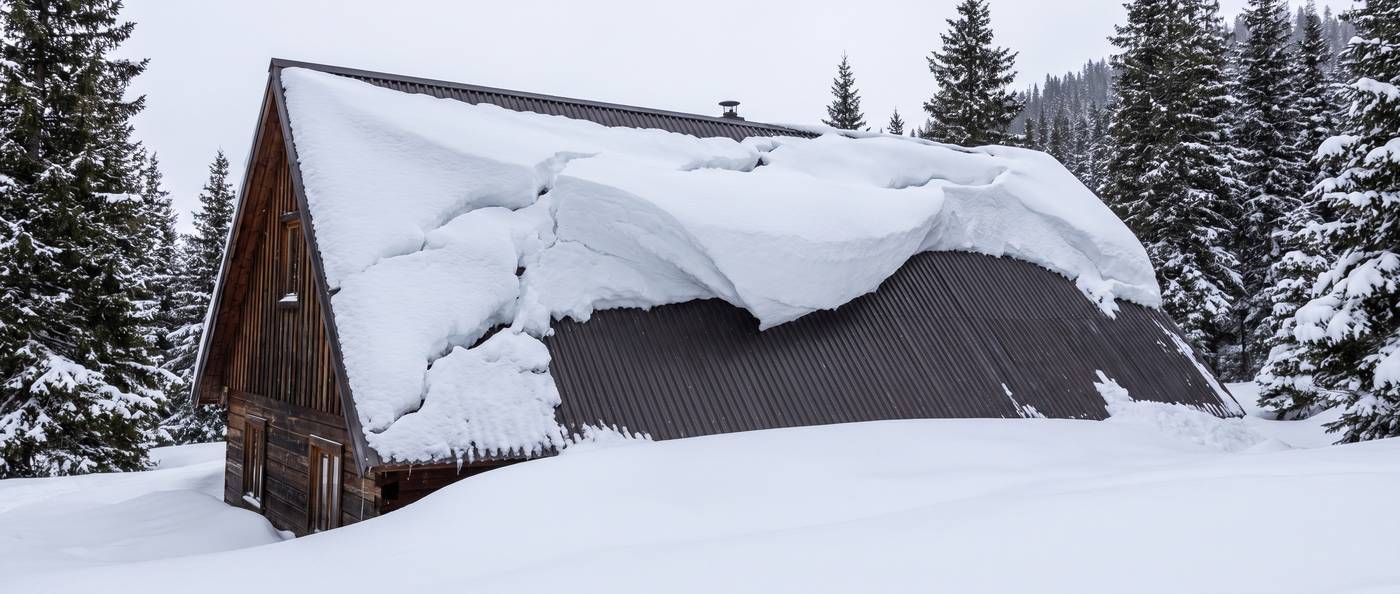
The town averages 170.8 inches of snow a year under NOAA's 1991–2020 normals, concentrated in December through March — three consecutive months averaging over 27 inches each. Pitkin County's design criteria list a winter design temperature of −16°F and a weathering severity of “Severe.” Add complex architecture with multiple roof planes, valleys, dormers and lower roofs tucked under bigger ones, plus a housing stock where a meaningful share of homes are empty mid-storm, and you get problems that are well developed before anyone notices them.
Emergencies at Unoccupied Homes
The worst outcomes in this valley happen at houses nobody is standing in. A leak that starts on a Tuesday and is found three weeks later is not a drywall repair anymore. If you own or manage a home that sits empty, a storm-triggered check is the cheapest insurance available — and it is the difference between a $400 visit and a five-figure restoration.
After the Emergency
Once the immediate problem is handled, the conversation turns to why it happened. Ice dams come from heat loss and drainage. Heat cable keeps drain paths open. Snow retention stops uncontrolled releases onto walkways and lower roofs. Emergencies repeat until the cause is addressed.