Roof Snow Removal for Second Homes & Property Managers in Aspen
The most expensive roof problems in this valley happen at houses nobody is standing in. A leak that starts on a Tuesday and gets discovered three weeks later is not a drywall repair — it is saturated insulation, ruined flooring, and a remediation contractor. Roof snow removal for unoccupied Aspen homes is mostly about catching things while they are still small.
Aspen has an unusually high share of homes that are not occupied year-round, and second-home owners here routinely retain a local property manager for snow, maintenance and on-call emergencies. That structure works well for driveways and mechanical systems. Roofs are the part that tends to fall between the cracks, because roof snow is a specialist trade and it only matters for a few months a year.
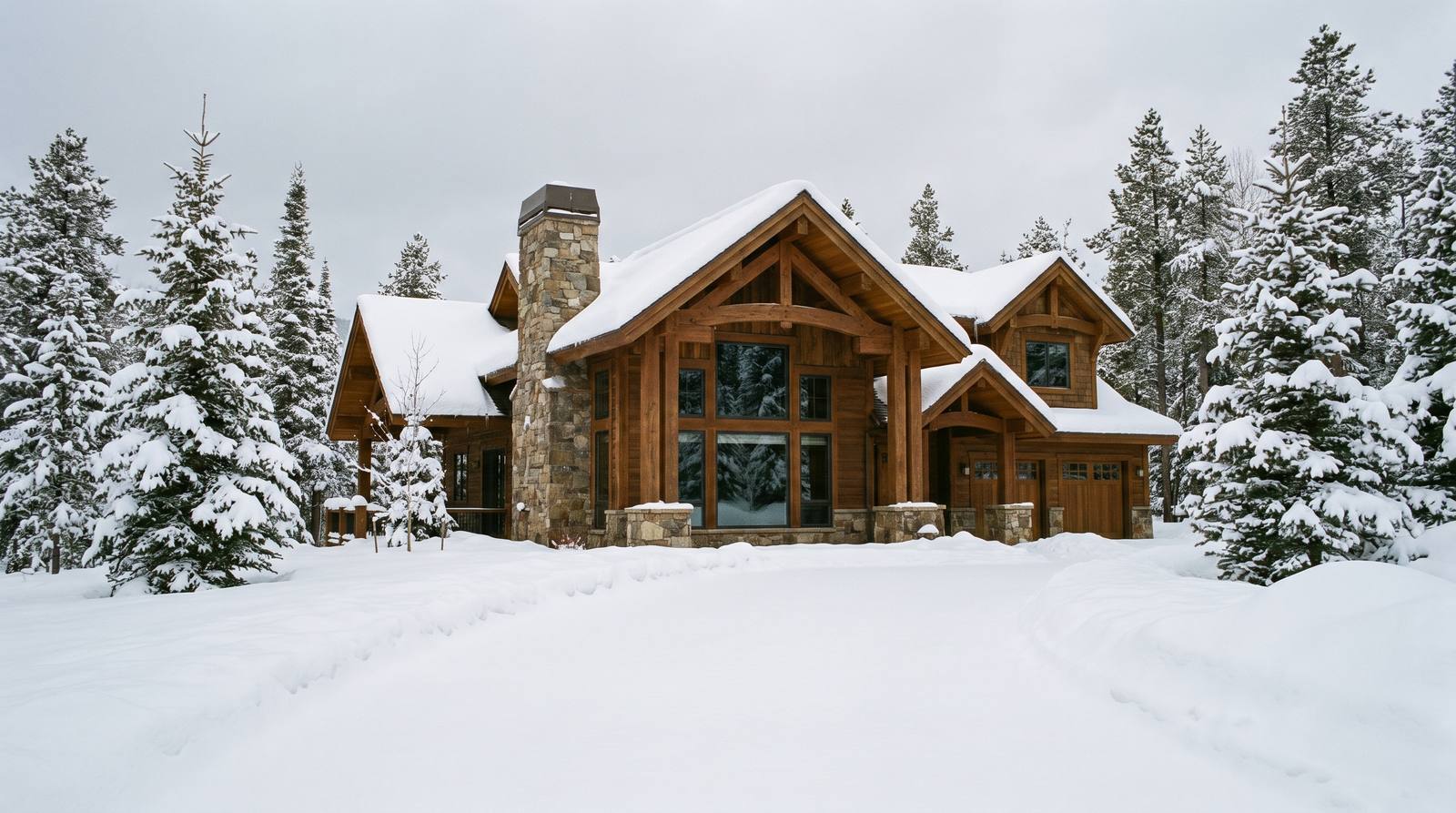
What Goes Wrong at an Empty House
- Ice dams nobody sees. Water enters, runs behind the finish and soaks insulation for weeks before anyone opens the door.
- Load stacking up. Nobody is inside to notice doors binding or a new crack over a door frame.
- Lower roofs buried. A steep upper roof sheds onto a garage, entry roof or deck that was never designed to receive it, and it just sits there.
- Buried flues and vents. A blocked furnace or water-heater flue is a carbon monoxide problem waiting for the next person through the door. Pitkin County's code requires plumbing vents to terminate six inches above anticipated snow accumulation for a reason.
- Blocked egress. A snow release across the only exit path, discovered by the first guest to arrive.
- Frozen pipes downstream. Water damage and a cold house often arrive together.
How Coverage Is Usually Structured
- Storm-triggered visits. Snowfall past an agreed threshold puts the property on the route automatically. No one has to remember to call.
- Scheduled seasonal service. Regular visits across the season regardless of conditions, for properties where predictability matters more.
- Pre-arrival clearing. Roof, entries and egress cleared before an owner or guest lands — scheduled around arrival dates.
- On-call emergency. Priority response for active leaks and structural concerns, with emergency service reserved for contract properties first.
- Fall preparation. Heat cable and snow retention installed before the season, which is what actually reduces the number of winter calls.
Documentation, Because You Are Reporting to Somebody
Every visit produces photographs before and after, notes on what was found, and a flag on anything developing — ice building in a valley, a lower roof taking a shed load, a vent starting to bury. If you manage properties for owners who are elsewhere, that record is usually the entire value: it is what turns “we went out there” into something an owner can see.
Multiple Properties
Managers and family offices running several homes get route-based scheduling, consolidated billing and a single point of contact rather than a separate arrangement per address. If you are handling a portfolio across Aspen, Snowmass Village and down-valley, that is a normal shape for this work.
Serving Owners and Managers Across the Valley
Aspen, Snowmass Village, Woody Creek, Old Snowmass, Basalt, El Jebel, Carbondale and Glenwood Springs. The right time to set up seasonal coverage is September or early October — before the first storm, while fall preventive work can still be done on a dry roof.